Thursday, 16 January 2014

Five W's Chart Example.

Five W's Chart
Fill in each row with details that answer the question with a news story.

What happened?
A man with severe chest pain died after waiting 42 minutes for an ambulance.

Who was there?
Fred Pring, 74 and his wife Joyce.

Why did it happen?
A statement read out from a paramedic on duty that night heard staff were constantly on the go with "call after call".
Staff were very busy that night and he had been threatened at knifepoint in a dispute over which hospital to take a patient to on the call before Mrs Pring's.

When did it happen?
21 March 2013.

Where did it happen?
His home in Mynydd Isa, Flintshire.


News Broadcast Conventions and How Things Have Changed.

The first BBC news broadcasts attempted to be completely impartial and unbiased way - not showing the presenter meant that they were unable to express their opinions through facial expressions. So many people had been used to radio beforehand, and were also worried that showing moving images as the news was read would distract the viewers from the audio, and so instead decided to show a newsreel footage at the end of the news. There was also background music as the stories were being read, which is something that is not used in modern news broadcasts. Interviews and graphics were still used in early broadcasts, however, although have developed over the years.

Overseas news reports still had to be sent back to England on an aircraft to be broadcast the next day, however. As news progressed, news broadcasts were displayed on camera instead of it simply being their voice. Reporters on the scene have always given a direct address, looking straight at the camera and talking to the viewers to make them feel closer to the news, and give them the feeling of interacting with the reports. Reporters always seem to wear clothes that match the location that they're in - for example, in the studio, they wear professional, smart clothes, however reporters on the scene in places such as war zones often wear more casual clothes.

As technology developed and improved, news reporters were able to broadcast live news reports from other countries, and show shocking news stories in which people had not been able to see in the full scale before. Events were able to unfold live on television in peoples' living rooms, putting them even closer to the action and events than ever before. However, in the modern days, the more extreme footage of deaths and killings seem to have been phased out slightly after people having somewhat of an outcry over the upsetting nature of the footage.

In the 1990s, 24 hour news channels became available, with more and more news available around the world to report on. The same kinds of stories such as disasters, wars, traditional events, sporting achievements and political news have always been broadcast on the news, even since it was first started. A mixture of graphics, a news reporter talking about the stories in the studio and reports from the scenes themselves became common. It became more and more common to have a montage of clips based on the news story with a voice over layered across the top, with the occasional cut away to a reporter speaking about the news to break it up.


To sum it up, the main conventions of news broadcasts can be summed up in the following list:
-A specific order/format. (Title sequence(s), a summary of the news stories, then a top story going down to sports, weather and finally a happy and light-hearted news story.)
-Graphics/text.
-Presenters, with the way they address the viewers and the clothes they wear.
-Voice overs with montages of news footage and cut aways to an on the scene presenter.
-Interviews relating to the news stories.
-The types of stories broadcast.

Wednesday, 15 January 2014

News Programme Proposal Letter

Killjoy Productions.
South-Essex College,
Southend-On-Sea,
Luker Road,
SS1 1ND.


Dear whom it may concern,

I am writing to offer you a chance to take part within a new project that is currently in the pre-production stages of development, focused mainly on local news, which will be presented in such a way that grasps the interest of the entire family.

Currently, the main members of the crew include Nicola Sinclair, David Neale, Jemma Land and Connor Sadler. We will be deciding at a later date on other members of the crew and cast – such as presenters, for example.

As previously stated, it will be targeted towards families of all ages, and also those within the local area. Therefore, it will probably be broadcast weekly during the mid-afternoon on a Saturday, possibly at some point between 2pm and 4pm on a larger channel. It will involve a wide range of all types of news stories, from politics to animals, and the main similarity between the stories will be that they are all within the local area.

The show will have a light-hearted feel to it, with a bright, colourful set and cheerful presenters. There will possibly be some uplifting graphics and intros/outros for the show and VT inserts which will match the lighter colour scheme. The majority of news stories will also take on this feel, and attempt to lighten up peoples’ Saturday afternoons with positive news stories that feel far closer to home than the larger news programmes show.

Our current working title is ‘South Essex News’, however this will most likely change over the course of the pre-production to match the programme’s feel.

Yours sincerely,
Nicola Sinclair and David Neale. 

'How To Make Your Screenplay Awesome!'

           1.    A clear setting.
When and where does the story take place? Lock that in your very first slugline.

For example:
‘INT. CAFETERIA, SOUTH ESSEX COLLEGE – AFTERNOON.’


2.    Describe that setting.
When people read your script, they probably wont know the environment you’re talking about. Describe it in a couple of short, sharp sentences.

For example:
‘INT. CAFETERIA, SOUTH ESSEX COLLEGE – DAY.
Bustling, busy, full of fashionably dressed teenagers. Chrome and glass surfaces, gossip fills the air as students talk and eat.’


3.    Introducing characters.
Throw in a couple of vivid details to make the reader picture the character in their head.

For example:
‘Kayla Frost, 19 – Stick-thin, looks like she might snap at any moment. Her Levi’s might be faded, but her eyes burn fiercely from under a gothic mop of hair.’


4.    Naming your characters.
Make sure each character’s name is different, and looks different when written down.

Give each character a surname, too. If they’ve only got a first name it comes across as an incomplete identity.


5.    Conflict, conflict, conflict.
Not only should your screenplay be based on a wider conflict of some kind, but each character should also have internal conflicts that they are dealing with.

Doubts, insecurities, unfinished business. None of us glide through life without stuff boiling away inside, and your characters shouldn’t either.


6.    She’s filled with secrets.
Giving your characters secrets, whether big or small, enables you to pick away layers and keeps your viewer interested along the way.


7.    Keep it consistent.
Make sure that you keep your characters consistent in both background and behaviour.

For example:
If Dave is an ex-con with a violent past, make sure that he acts that way when confronted by trouble.


8.    Dialogue stuff: sentences.
People don’t speak in complete sentences, nor do people all speak alike. You need to let your characters dictate where the punctuation goes. Gaps, pauses, unfinished sentences are more realistic.

Try recording people speaking and listening to it back.


9.    Stay away from the nose!
The phrase ‘on the nose’ refers to dialogue that states too clearly what a character is thinking, without filtering it through their personality and agenda.

For example:
If Dave tells his closest friend ‘I want to be a policeman,’ the chances are that this won’t play as well as having the application forms fall out of his gym bag might do.


10. Keep it unpredictable.
When Princess Leia tells Han Solo ‘I love you’ in The Empire Strikes Back, the scene is most memorable for his response of;
‘I know.’

You want dialogue to flow, but you need to rethink predictable exchanges. Throw away the first response you think of. Throw away the second one too. Maybe use the third.


11. Keep it varied.
Does a character even need to respond verbally to a statement? If someone says ‘goodbye’ to them, do they need to speak in return? Couldn’t they wink instead?

Once again, predictability is your enemy.


12. First line.
The first line that your character speaks should sum up an aspect of their personality. Your characters only get one chance to make a first impression, so make sure that it packs a punch.

For example:
If you’re introducing a party animal like Stifler from the American Pie series, his first line wouldn’t be something mundane about being late for an appointment.


13. Language = life.
Make sure your character’s dialogue reflects their life experiences.

For example:
A 70 year-old English professor won’t speak the same way as a 25 year-old football player, and a character born in 1960 will speak differently to one born in 1990.

Make their dialogue reflect this!


14. Double hyphen.
Has one character stepped on another’s line, cutting them off before they finish speaking?

The traditional way to show this in a scrip is with a double hyphen.

For example:
                                    WIFE
You know, I never told you—

                                    HUSBAND
I don’t want to hear it!


15. Fresh slang.
Why not make up your own slang? Using the latest words, phrases and cultural references will date your script extremely quickly.

Writers like Joss Whedon make up their own phrases and drop those into the script (For example: ‘What’s the sitch?’ meaning ‘What’s the situation/What’s going on?’ originated in Buffy The Vampire Slayer.)

An audience won’t know the difference between a slang phrase you’ve made up and one they’ve never heard before, but they’ll certainly notice a dated turn of phrase. You dig, man?


16. Mix dialogue and action.
In life, stuff happens all at once. People don’t stop talking because a bus is about to explode; the bus explodes whilst they’re in mid-sentence.

Don’t be afraid to have action and dialogue crash into each other, because things in real life don’t happen in a neat order.


17. Don’t tell me what I’ve seen!
If Debbie’s head just exploded, the viewer doesn’t need James to tell them;
‘My God, Debbie’s head just exploded!’

They’ve already noticed. Eliminate dialogue that narrates the action.


18. No place for closed questions.
If you’ve got a question that leads to a ‘yes’ or ‘no’ response in your dialogue, get rid of it. They stop the dialogue dead, and the audience can anticipate the response.

Replace them with open questions to let your characters’ personalities shine through.


19. Misunderstandings.
Characters should misunderstand and misinterpret at each other, just as people do in real life.

It gives you great opportunities for conflict and comedy, plus it makes the dialogue seem more authentic when read through.


20. Style stuff: present tense.
Always keep your action descriptions in the present tense.

For example:
‘Gaby chases Fred into the ice-cream shop.’
Not:
‘Gaby has chased Fred into the ice-cream shop.’

You need to have the action unfold in the present as it unfolds on the page.


21. What not to include.
The action descriptions in your screenplay should not include anything that can’t be shown visually, such as:
-Thoughts.
-Hopes.
-A back story.

If you want to include these things, you need to show them through events or dialogue.


22. Keep it clear.
‘The father of the bride, who runs a pizza restaurant’ is ambiguous. Who sells the pizzas? The father or the bride?
Compare it to; ‘The bride, whose father runs a pizza restaurant.’

Keep it clear - the less ambiguity, the better.


23. ‘OH MY GOD.’
Using ALL CAPITALS in your action descriptions signifies something important. It’s a way of making the important elements pop when someone reads the script.

For example:
‘The whole building EXPLODES.’

Don’t get carried away and end up with half of your action description in caps, however. Use it sparingly.


24. Keep it punchy.
Break long sentences and keep your descriptions as vivid as you can.

Is Jennie trying to keep her breathing under control as she walks across a tightrope? Sometimes fewer words work better.

For example:
Inhale. Exhale. Jennie steps out.


25. Write it first, then edit.
The script won’t be as punchy, exciting and engaging as possible on the first draft.

Your mission on the first draft is just to get the thing written.


Second, third, fourth and fifth drafts are the opportunity to make your screenplay everything it can possibly be.

Friday, 13 December 2013

Look How Far We've Come Music Video


This is the finished music video for the song 'Look How Far We've Come' by Imagine Dragons. Below is also the link to all of my production work for the video, including the concept ideas, treatment, proposal, storyboards, scripts, schedules, location recces, contracts, risk assessments and also the evaluation.


Friday, 6 December 2013

Video Editing Five Minute Presentation

Here is my finished five-minute spoken presentation on video editing techniques and how they have developed throughout the years.

Friday, 29 November 2013

Sophie Muller - Music Video Director Essay

Music videos in themselves are generally created to be entertaining for the audience, such as the ones mentioned later on in this essay. The film maker and the musician(s) want to keep the audience interested in the video and the song, which also makes the videos a great marketing tool to promote the musician(s) and also the film maker - such as Sophie Muller, the director that this piece of work is focusing on.

The industry makes money out of the musician(s) and their work, and therefore they want to promote the artists through the videos so that it encourages people to buy their music and would generate a profit. If people enjoy the video, and want to listen to that song and others from the same artist, they would then go and spend money on buying their songs, and the record labels would generate money through the sales. It benefits the musicians too, however, as videos - especially ones that include the artist(s) actually performing - often encourage fans to buy tickets for gigs and to see them live.

And it's not only the artist that it's promoting - the film maker, such as Sophie Muller, is able to use the videos to express their creativity, such as the way she comes up with a variety of ideas to bring the songs to life on the screen. She's also extremely creative through the way she mixes concept videos, or narrative videos together with performance aspects, but does so in a way in which they work well together and fit the music, involving and interesting the audience. Directors can also can use the videos that they create in their portfolios to attract attention from others and gain more popularity and work in the video industry, benefiting them too. Although Sophie Muller doesn't particularly have a distinctive style when it comes to her music videos, she has been in the industry for a few decades and has made her name by working with a number of top musical artists to create memorable videos, and this allows her to continue to attract work from other artists.

It's also a way for the audience and the musicians to feel closer to each other, however, as it is common for the artist to perform during the video and the fans of the artists can easily watch them do so from the comfort of their own home. This gives something of a connection between the artist and the fans, and makes the fans more interested in the artists.  However, music videos are not just for entertainment, and can be used to portray a message, or make the audience think about certain things that the film maker and/or the artist wants them to consider - whether this is a political or a moral message, or something completely different. Artists are often considered to be more influential than politicians, and this is one of the ways they can show people their messages.


Sophie Muller is an English music video director who has been making videos since the 80s, and is well-known with creating videos for artists such as No Doubt, Sade, The Killers, Blur, Annie Lennox and many more artists in long-term collaborations. Her music videos usually consist of portraying the artist’s feelings through the video, simply by filming them performing whilst being isolated in a dim room, however she also has worked on other videos with a completely different style, such as the three music videos that I will be looking at. These are:

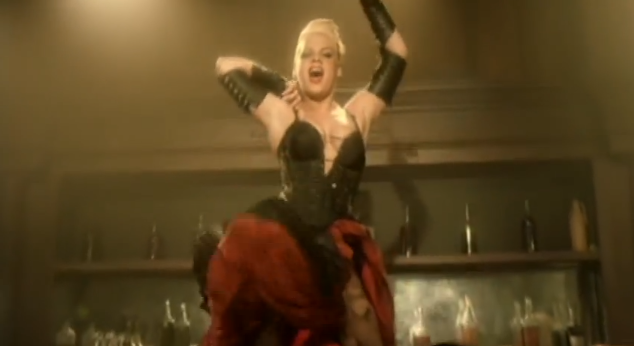
‘Trouble’ by P!nk (2003).

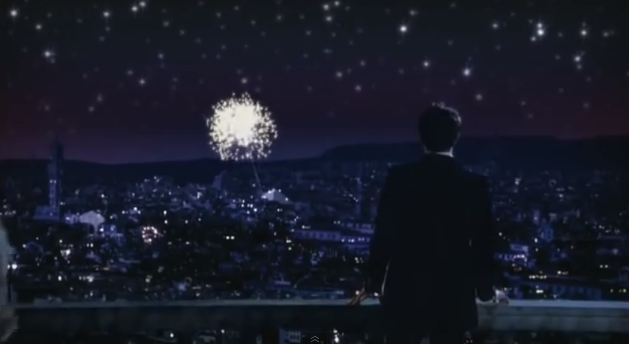
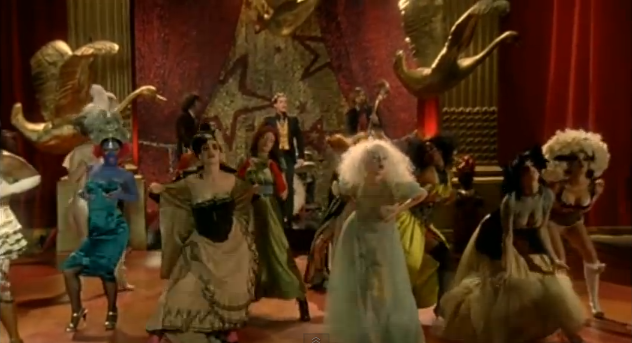
‘Mr Brightside’ by The Killers (2004).

‘Grace Kelly’ by Mika (2007).


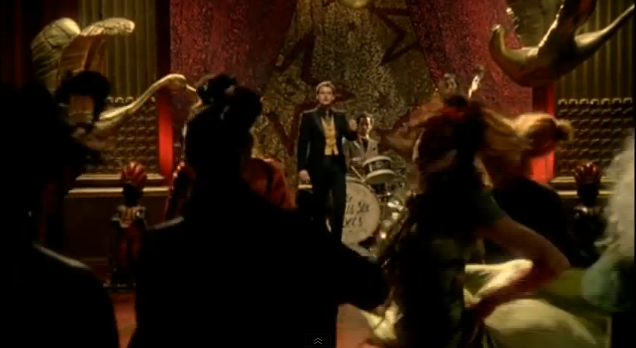
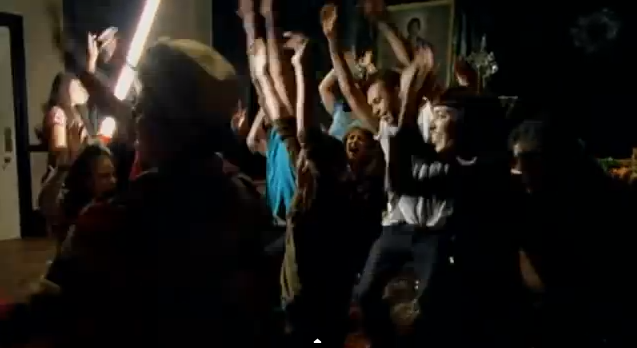
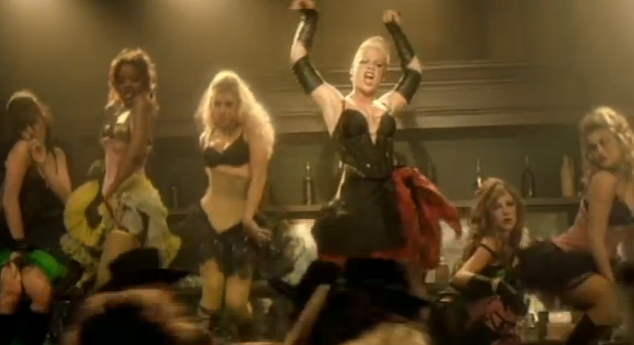
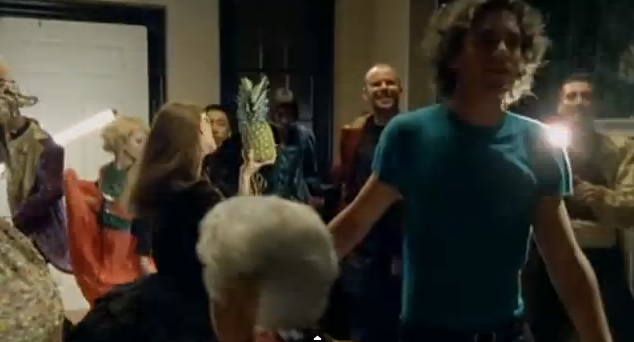
They all seem quite lively and energetic videos, which is different from some of her other darker and more simpler videos, though both ‘Trouble’ and ‘Mr Brightside’ also have a little bit of a serious undertone to them - with P!nk freeing the Western town from the oppressing sheriff and his group, whilst the storyline of the girl in ‘Mr Brightside’ being about her in a love triangle with a man and the lead singer from the band itself. They all also include lively scenes, and all three involve a party of some sort – with ‘Grace Kelly’ being focused on a house party or an energetic photo/film shoot, ‘Mr Brightside’ being set at something similar to a burlesque show, and ‘Trouble’ having some scenes within a bar where later in the video quite a bit of dancing takes place. Not only are the videos lively, but there is also a dance sequence of some form being shown in each of the videos at one point or another, which manages to fit in well with the pace and ideas of the videos.


These three music videos are most likely directed towards people in their late teens and early 20s, as well as for fans of the artists. They are fast-paced and quite dimly lit, with two having slightly more serious backstories to them then you would first imagine, which would draw in the interest of this particular group of people. Meanwhile, older people would probably not be able to keep up with the speed of the cuts within the videos, whilst younger children would simply be confused by what is happening within them. With the backstories, for example, during 'Mr Brightside', it seems to be about a complicated love triangle set at a burlesque show, but also seems to be reminiscent of a 2001 film called 'Moulin Rouge!' where a similar storyline takes place. Also, during 'Trouble', the backstory of the video is about P!nk freeing a small town from male oppression, with everything set in an old Western town. 

All of the videos are cut quite quickly, which makes them feel lively and energetic – grabbing the audience’s attention and making them interested to continuing to watch the video. The videos also include some kind of performance aspect during them, with the singer/band performing - even if it is only for certain parts of the video and not the entire thing. Although they all have these features of performance within them, it is clear that ‘Trouble’ and ‘Mr Brightside’ are also quite focused on being narrative, whilst ‘Grace Kelly’ shows faint signs of all three, seeing as it is rather conceptual too, with random scenes appearing that make little sense but are still amusing to the audience.

There are often a lot of scenes in the music videos where the camera quickly zooms in/out on a certain object or person, which highlights an important part of the video – whether that is an object or a person – and this makes the video seem snappy and upbeat. Also, barely any of the shots in any of the three videos seem to stay still. They all move in some way, whether it’s zooming in and out, panning, or the slight shakiness of a handheld shot. This engages the audience and makes them feel as though they are closer to the events of the videos, helping to attract their interest and attention of the audience that it is aimed towards. For example, during 'Trouble', the camera zooms in quickly on the sheriff of the city, introducing him as a key character within the music video, and also the horse's injuries, showing why she is suddenly angry with the men nearby. During 'Grace Kelly', the camera occasionally zooms in and out on Mika quickly, matching the tempo of the music and making the clip seem more interesting than it originally would have done without the effect.

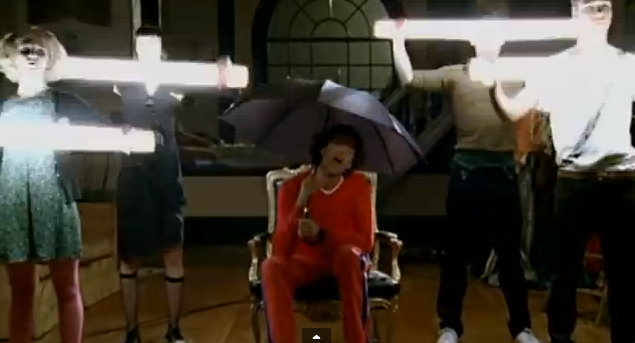
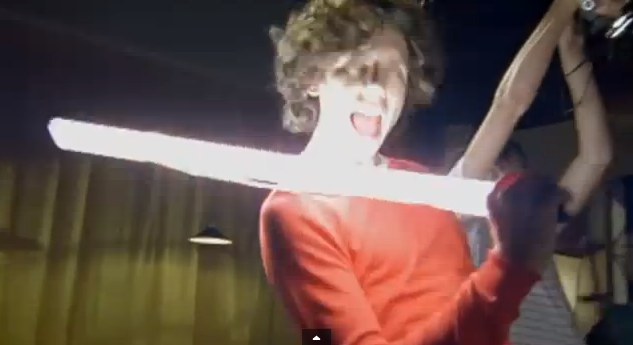
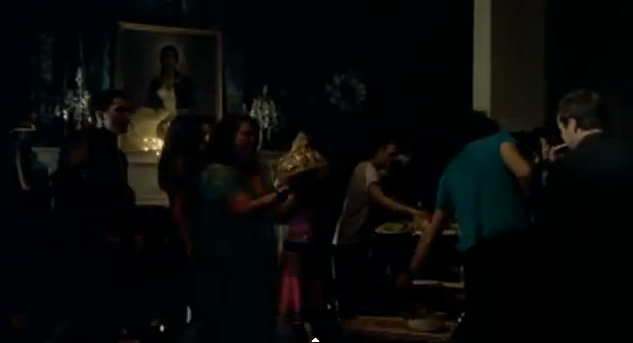
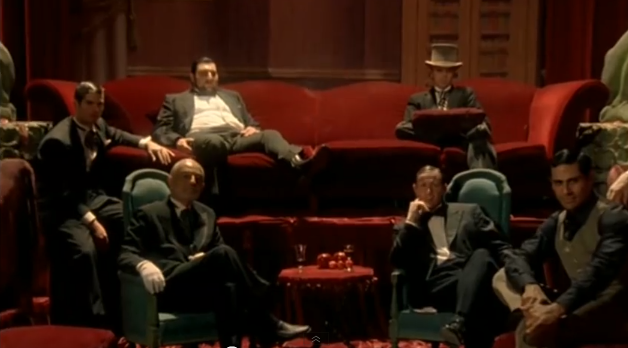
During ‘Mr Brightside’ and ‘Grace Kelly’, the lighting is quite dark. In ‘Grace Kelly’ you can clearly see lights being held by people within the video, lighting certain people up, or creating interesting dance sequences with the handheld lights. Within this video, a lot of the people in the shots can barely be seen because they are in the dark, or their faces are hidden by shadows. During ‘Trouble’, the lighting seems to be quite natural, but also rather murky for most of the scenes to give it the impression of being almost like a ‘Wild West’ film with cowboys and Indians. ‘Mr Brightside’ also seems quite dimly lit, with an almost smoky atmosphere inside the room that it’s filmed in, giving it a slightly darker feel to it than the ‘Grace Kelly’ video, which wasn’t lit quite as much although still had more of a cheerful and happy feel to it whereas ‘Mr Brightside’ was more serious.


In ‘Trouble’, P!nk is wearing a rather revealing dress, and so are the other women that appear later on in the video which shows the idea of voyeurism being used. She also performs some suggestive dances, as well a scene where she seduces the town’s sheriff in light foreplay to get herself out of jail. Within ‘Mr Brightside’, all the women are wearing skimpy-ish dresses and performing a dance similar to the can-can, as well as the main woman often performing provocative dances around a couple of the characters, although ‘Grace Kelly’ shows no sign of voyeurism at all.


All these videos seem to be mostly for entertainment, as well as marketing the song and artist which is generally why videos are created in the first place. They are all created in a upbeat way which makes people interested in watching them, and the storylines behind them are there for entertainment purposes rather than to portray a serious message. They also manage to express the feelings of the songs through the videos – with ‘Grace Kelly’ being based on musical artists trying to change themselves to be popular, ‘Trouble’ being about someone freeing a town from a controlling sheriff, and expressing her thoughts on male oppression and rebellion whilst ‘Mr Brightside’ is dealing with a complicated love triangle. ‘Grace Kelly’ was also written by Mika to express his feelings when the record company wanted to change him to be more like other artists, which he disagreed with, and although the video doesn’t show this through a narrative, you can grasp the basic concept of his feelings within the song through the video itself.

I personally really enjoyed watching these music videos; they’re engaging, energetic and are amusing to watch. They also match the music track really well, and two successfully tell a story as they have attempted to. The editing matches the speed and tempo of the music, and the cinematography gives them a lively feel to it which makes me want to watch them more than once instead of changing the channel if these videos appeared on a music channel on my television.